
Mosaic Book of the Term Prize Draw Autumn 2025

Written by Rob Caudwell, Co-Founder of Penrose Education
27 February 2026
At Penrose Education we are on a mission to fill the (teacher development) world with thoughtfully designed and effective EdTech. But we also want to fill the (teacher development) world with books.
Each term we will be reviewing a book we have found helpful, interesting and/or thought-provoking in our attempts to develop our understanding of what exceptional teacher training, education and professional development looks like. Best of all – you could win a copy of one of these books in our Book of the Term Prize Draw!
This term we’ve chosen to do a DOUBLE prize draw, and give away copies of TWO books:
- Teacher Recruitment, Retention and Career Progression: A guide for school leaders edited by the Chartered College of Teaching
-
A Little Guide for Teachers: Cultivating Belonging in Schools by Hannah Wilson
Why we chose these books?
Our organisation’s mission is to help bring about an Education sector that is filled with happy, motivated and skilful teachers. The tech that we have built is mainly used to support student/trainee/early career teachers, and so we see ourselves as part (the technological part) of the sector’s welcoming committee. This is a responsibility we take seriously.
While EdTech is important, it is a small part of the picture. We are ultimately only going to achieve our mission, if we spend time thinking broadly and deeply about questions like:
- What motivates people to join the teaching profession – and what barriers prevent people from joining?
- What helps people survive and thrive in teaching – and what can make teaching harder or less attractive?
- How can we best help new teachers to make their classrooms safe and welcoming places for the children they work with?
- How can we understand and respond to the robust evidence of systemic discrimination and inequity around career entry and career progression within teaching and educational leadership?
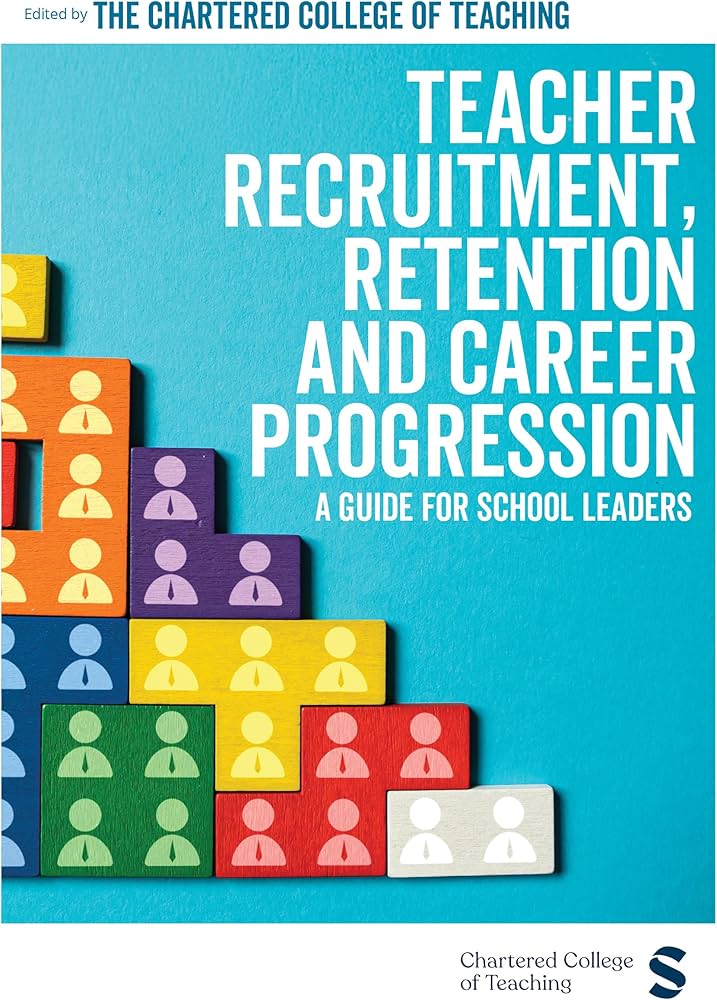
If you don’t win, you can pick up copies here…
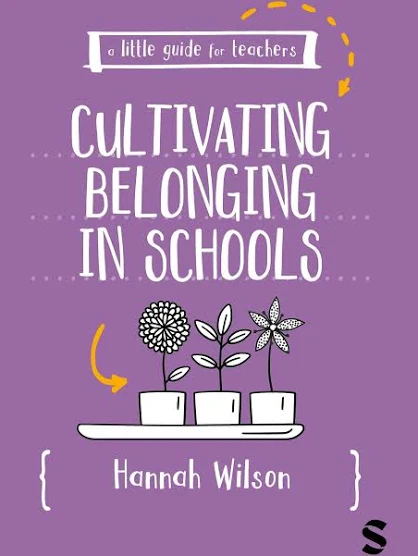
…and here from Sage Publications!
The TWO books we have chosen for our prize draw this term both, in different ways, help us to explore and begin to answer these questions. They are both excellent, rich, practical texts that are full of evidence, guidance and resources for 1) how we can engage in the work of recruiting, retaining and developing excellent teachers and 2) how we can make our schools places where everyone (grown ups and children) can flourish. The Chartered College of Teaching’s book is “A Guide for School Leaders” and Hannah Wilson’s book is “A Little Guide for Teachers”, but both will be incredibly useful for anyone involved in teacher education and supporting student/trainee/early career teachers into the profession. The work of making classrooms and schools the welcoming, inclusive and thriving places we need them to be should touch every part of the Education sector.
What we've taken from "Teacher Recruitment, Retention and Career Progression"
"The future of education depends on the ability of schools to create spaces where every teacher, regardless of their identity, can bring their full authentic self to their profession. Only then can we achieve a full inclusive and representative teaching workforce that benefits us all."
- p101, Professor Catherine Lee
The first book in this term’s DOUBLE prize draw is a book edited by the Chartered College of Teaching that draws together professional learning from seventeen expert contributors, exploring various themes around teacher supply. Given the rich breadth of content, it is hard to summarise everything I appreciated about this book in the space of a few short paragraphs, but I will highlight two key take aways.
First, throughout the book (but particularly in Part 2) the contributors consistently remind us that inclusion is a fundamental precondition to a thriving teaching profession. Or put another way: we will not succeed in addressing the sector’s challenges around teacher recruitment, retention and career progression, without first addressing the structural inequalities that prevent colleagues from entering, staying in or progressing within the profession.
"School leaders have a crucial role to play in fostering inclusive recruitment practices, developing cultural capital among staff, adopting human-centred leadership approaches and developing inclusive policies that are consistently implemented... Working towards the creation of a truly equitable and inclusive teaching profession will not only benefit minority ethnic teachers, but will also enrich the educational experiences and outcomes of all students."
- p76, Angela Browne & Sufian Sadiq
In chapter 4, Beng Huat See, Stephen Gorard and Fujia Yang explore the persistent ethnic disproportionalities in the teaching profession, examining how the teaching workforce in England is persistently less ethnically diverse than the pupil population it serves, before offering possible explanations and ways to address this. In chapter 5, Angela Browne and Sufian Sadiq also consider racial inequality within the profession, exploring the systemic causes of this inequality and offering guidance for school leaders in tackling (and ultimately dismantling) these entrenched structures of discrimination. Claire O’Neill, explores how to better recruit, support and retain neurodivergent teachers, in Chapter 6. In Chapter 7, Professor Catherine Lee, outlines the historical and current challenges LGBTQ+ teachers face when hoping to enter, remain in and progress within the profession. And in Chapter 9, Lucy Rose and Lindsay Patience, explore the interplay between flexible working policies and inclusive practice. Inclusion and inclusive practice cuts across a number of the other contributions as well.
The thread that runs throughout the book is that the systemic, discriminatory barriers that prevent any group of teachers from thriving in (or even entering) teaching damages the whole sector, as well as of course the teachers themselves. The entire education workforce is made poorer when we prevent colleagues from becoming or developing as teachers simply because of who they are. It is impossible to truly care about teacher recruitment, retention and career progression without also caring deeply about inclusion.
"Professional identity and autonomy are both important for the development of teacher professionalism. If teaching is to develop into a prestigious, highly esteemed profession where practitioners want to stay and progress, teachers must be provided with high-quality and relevant CPD opportunities, where the development of classroom expertise is appropriately recognised and rewarded as an alternative to traditional routes into leadership. It is also vital that practitioners are encouraged to critically engage with research evidence and given the autonomy to make the best decisions for their students."
- p31, Dr Victoria Cook & Dr Lisa-Maria Müller
My second take away is that a number of contributors also referenced the importance of establishing a clear idea of what “professionalism” and “professional identity” means for the teaching profession. It is not enough to simply persuade teachers to stay in the profession, the sector also has to support teachers to understand what it is to be a teacher – and to find pride, satisfaction, belonging and wellbeing in this work. Only by having an ambitious vision for what the profession can be, can we create the conditions for teachers to thrive.
In Chapter 1, Nansi Ellis and Gareth Conyard, explore the relationships between government policy, teacher professional development and “professionalism”; concluding with recommendations for how school leaders can navigate this landscape to create effective school cultures. In Chapter 2, Dr Victoria Cook and Dr Lisa-Maria Müller, build on their previous work for the Chartered College of Teaching, to discuss the potential role that CPD can play in helping teachers to develop their professional identities and sense of autonomy. Polly Butterfield-Tracey, makes a compelling case, in Chapter 3, for the essential, collaborative role of schools in ITT – as a key element for developing professionalism across the sector. In Chapter 8, Professor Tanya Ovenden-Hope explores the role that authentic reflective practice can play in developing “self-efficacy, autonomy and job satisfaction” in early career teachers. Finally, in Chapter 10, Yamina Bibi addresses the issues of teacher workload and wellbeing, and how these directly intersect with conceptions of teacher professionalism and professional identity.
Taken together, the book is thoroughly convincing. Teacher recruitment, retention and career progression will not be improved through superficial means. The goal should not be to simply prevent teachers from leaving the profession, but to offer a career absolutely worth staying in. We should articulate ambitious and attractive aspirations for what it means to be a teacher, and then work hard together to achieve these aspirations.
"Remember that the ultimate measure of success is not just whether teachers stay in your school, but whether they thrive and develop as professionals."
- p117, Professor Tanya Ovenden-Hope
What we've taken from "Cultivating Belonging in Schools"
"Let's be clear, better staff belonging in a school leads to better pupil belonging. Better pupil belonging leads to improved attendance, increased engagement and enhanced outcomes. Belonging leads to better health and better results for all, especially our young people in preparing them for their futures."
- p58, Hannah Wilson
Our second book in this term’s DOUBLE prize draw is Hannah Wilson’s “Cultivating Belonging in Schools”, the latest in Sage’s series of Little Guide’s for Teachers. Though the book itself may be small, it is overflowing with inspiration, support, encouragement and advice for how to make our schools places where all children and grown ups can feel a deep and authentic sense of belonging.
Again, I have picked out two key things that I really appreciated about this book – from the many, many things that I loved!
"...belonging isn't a 'nice to have'; it's essential. It reduces anxiety, builds confidence and fosters resilience. When individuals feel they truly belong, their stress decreases, motivation rises and performance improves."
- p46, Hannah Wilson
First, this book makes it really clear that ensuring that our staff and pupils feel like they ‘belong’ in our schools is in everyone’s interests. Of course, there are clear moral reasons for ensuring that everyone feels a sense of belonging in our schools. We shouldn’t want anyone – regardless of identity or background – to feel like they are unwelcome or unsafe in our schools.
But, Hannah Wilson makes the thoroughly convincing case that the work of cultivating ‘belonging’ is not only for the benefit of those who might otherwise be excluded. Children who don’t feel like they belong, are less likely to attend or perform well in our schools. Staff who don’t feel a sense of belonging in our staffrooms, are more likely to be stressed, anxious, demotivated, isolated and unconfident. Diversity, equity, inclusion and belonging [DEIB] are not a “nice to haves” but are fundamental components to success in the education sector.
"For teachers and those working in education we need to consider the impact we can have in our classrooms and our schools. We need to be the change in teaching acceptance. We need to celebrate diversity and create a sense of belonging for all identities. We need to ensure the our environments are physically and psychologically safe for everybody. We need to have big conversations about the world to equip everybody with the knowledge, skills and values to navigate society."
- p85, Hannah Wilson
Second, the book is so incredibly practical! While the book underpins all of its central arguments with clear evidence and research; it is also very much written to be applied directly (and immediately!) into your practice. Throughout the book there are reflection exercises that challenge you to engage with the content and consider how it relates to your role, your circumstances, your sphere of influence. While the book is written for teachers, I found most of these were completely relevant for my role in EdTech, and I imagine would be suitable for anyone working in and around teacher training, education and development.
There are also so many resources either contained within the book itself (in the form of templates or guides) or signposted to. These include lectures to watch, models or frameworks to engage with and audits to conduct. Again, I suspect that the vast majority of these will be widely applicable, I have found many to be directly applicable to my work already!
Finally, the book is full of case studies and examples of teachers and school leaders who are working to improve how diversity, equity, inclusion and belonging is being experienced in their school or setting. This is so helpful, as it provides ideas, suggestions and inspiration for where else we might have opportunities to cultivate belonging in our own context.
In her introduction (see the quote below), Hannah Wilson explains that the reason she chose the word “cultivating” for the book’s title is because the work of DEIB is never “done”. Cultivating belonging in our sector and in our schools is work that will forever be ongoing. This book is full of practical advice, guidance and resources for how to continue this work.
"[Diversity, Equity, Inclusion and Belonging] is not a 'one and done' approach, belonging takes time and ongoing work in the form of commitment/investment... that is the nature of this work. It is not a clean nor a linear journey, we will never be done, we will never know it all."
- p8, Hannah Wilson
How can I win copies?
We are giving away three pairs of these two books to anyone working in positions related to teacher education, training and development.
Click the button below to be in with a chance to win.
Entries close 11:59pm on 12th of April. We will randomly select the lucky winners on the 13th of April.
See last term's Book of the Term below:
Mosaic Book of the Term Prize Draw – Autumn 2025 –
Win a copy of Early Career Teacher Entitlement: Great Expectations by Tanya Ovenden-Hope and Holly Kirkpatrick in Mosaic’s Autumn Book of the Term Prize Draw!